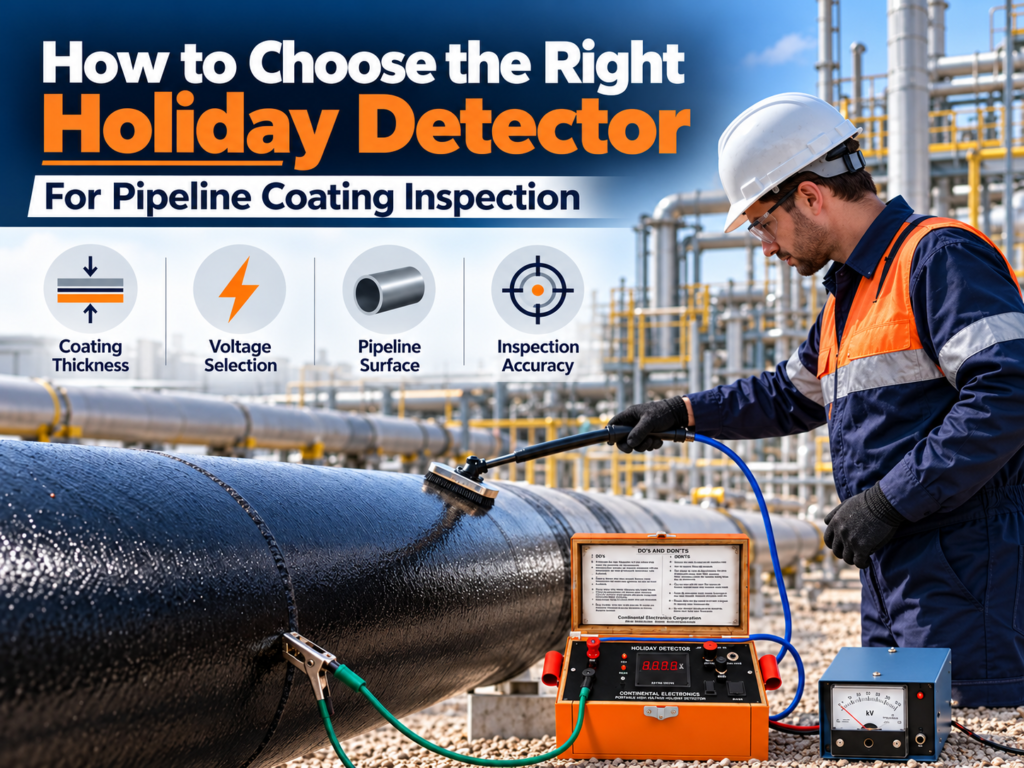
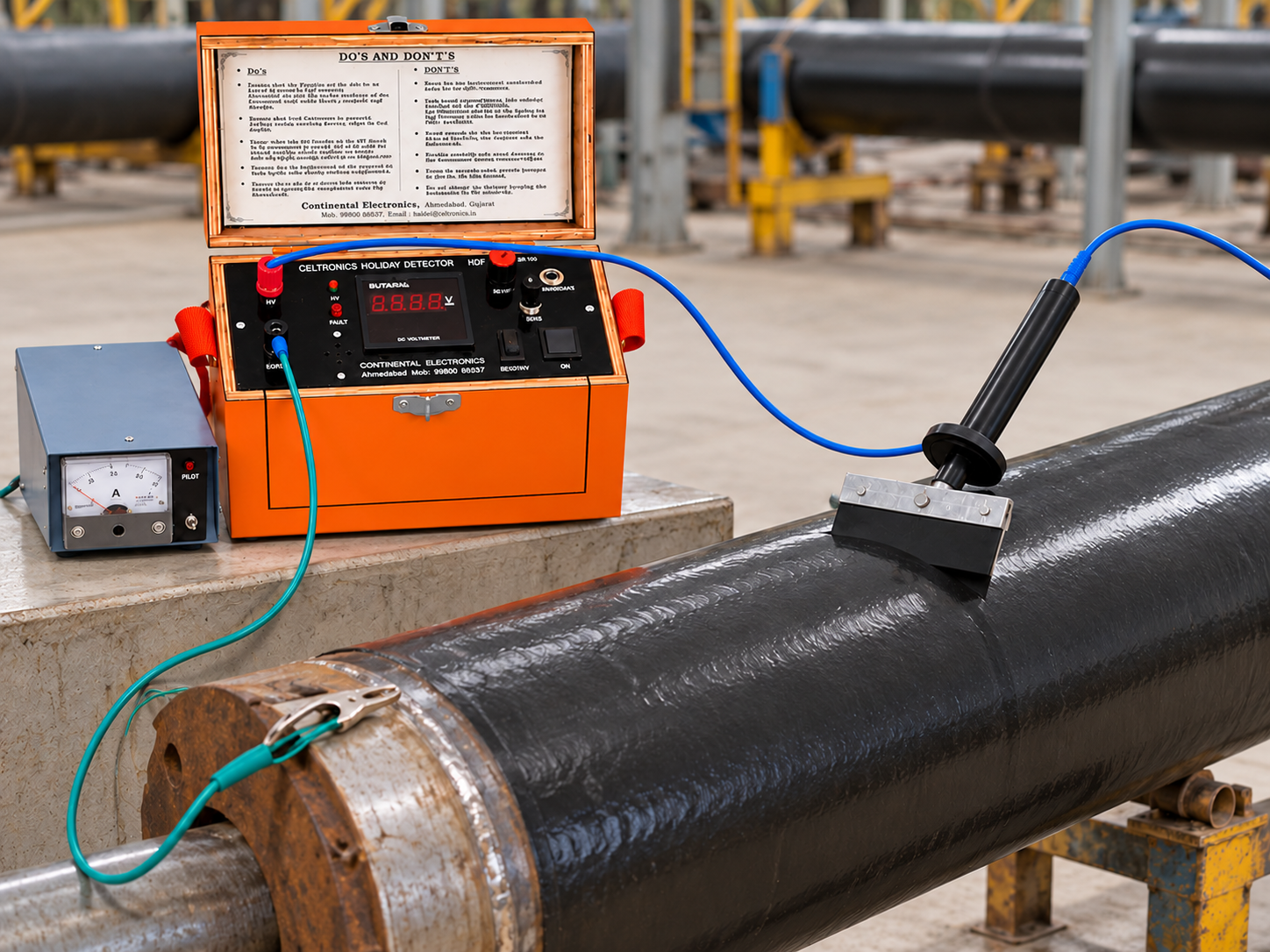
How to Choose the Right Holiday Detector for Pipeline Coating Inspection
Pipeline coatings protect metal surfaces from corrosion, moisture, and environmental damage. However, even small defects in protective coatings can lead to serious problems. A Holiday Detector helps identify pinholes, cracks, and discontinuities in pipeline coatings. Choosing the right holiday detector ensures accurate coating inspection, improved pipeline safety, and long-term protection.
What Is a Holiday Detector?
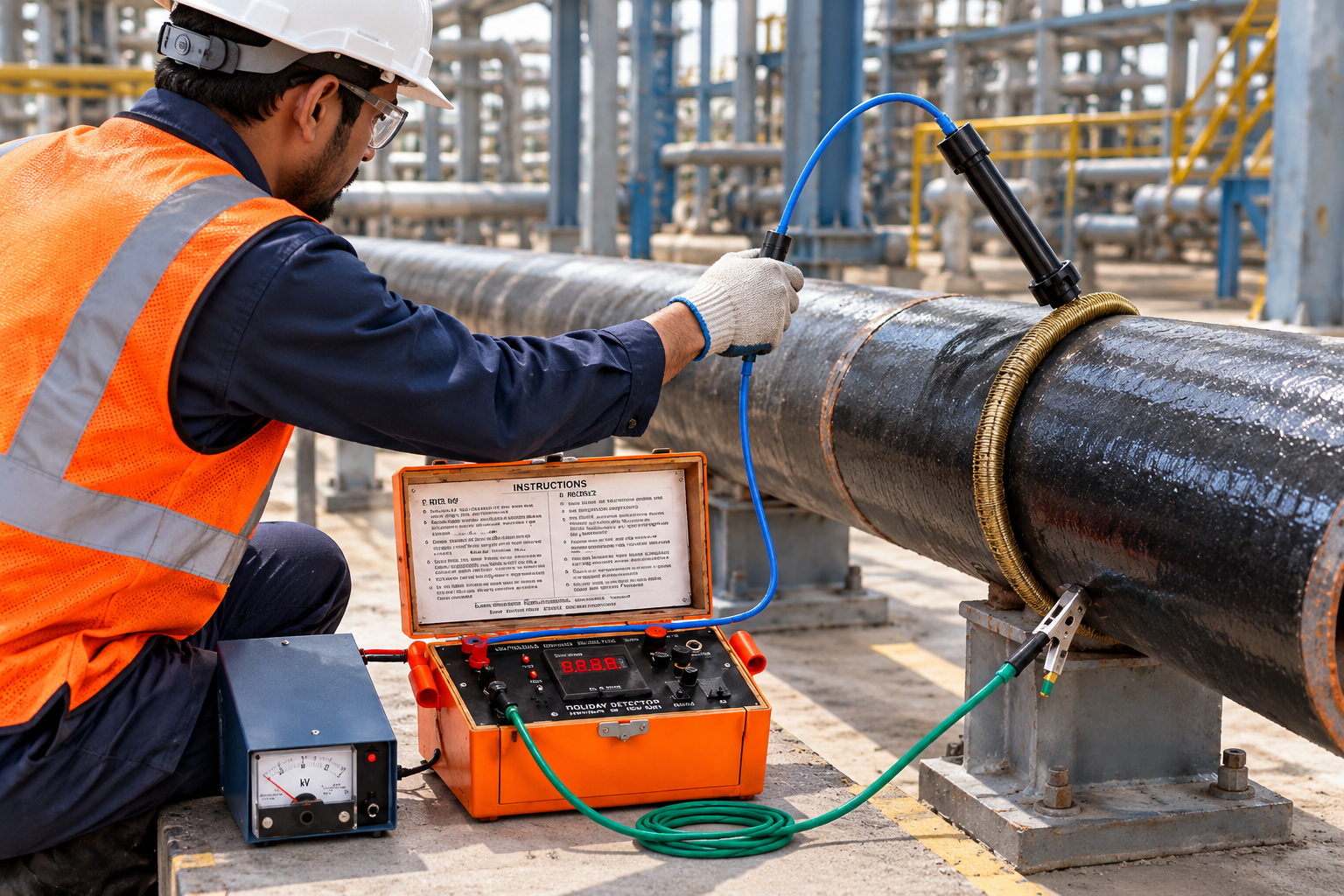
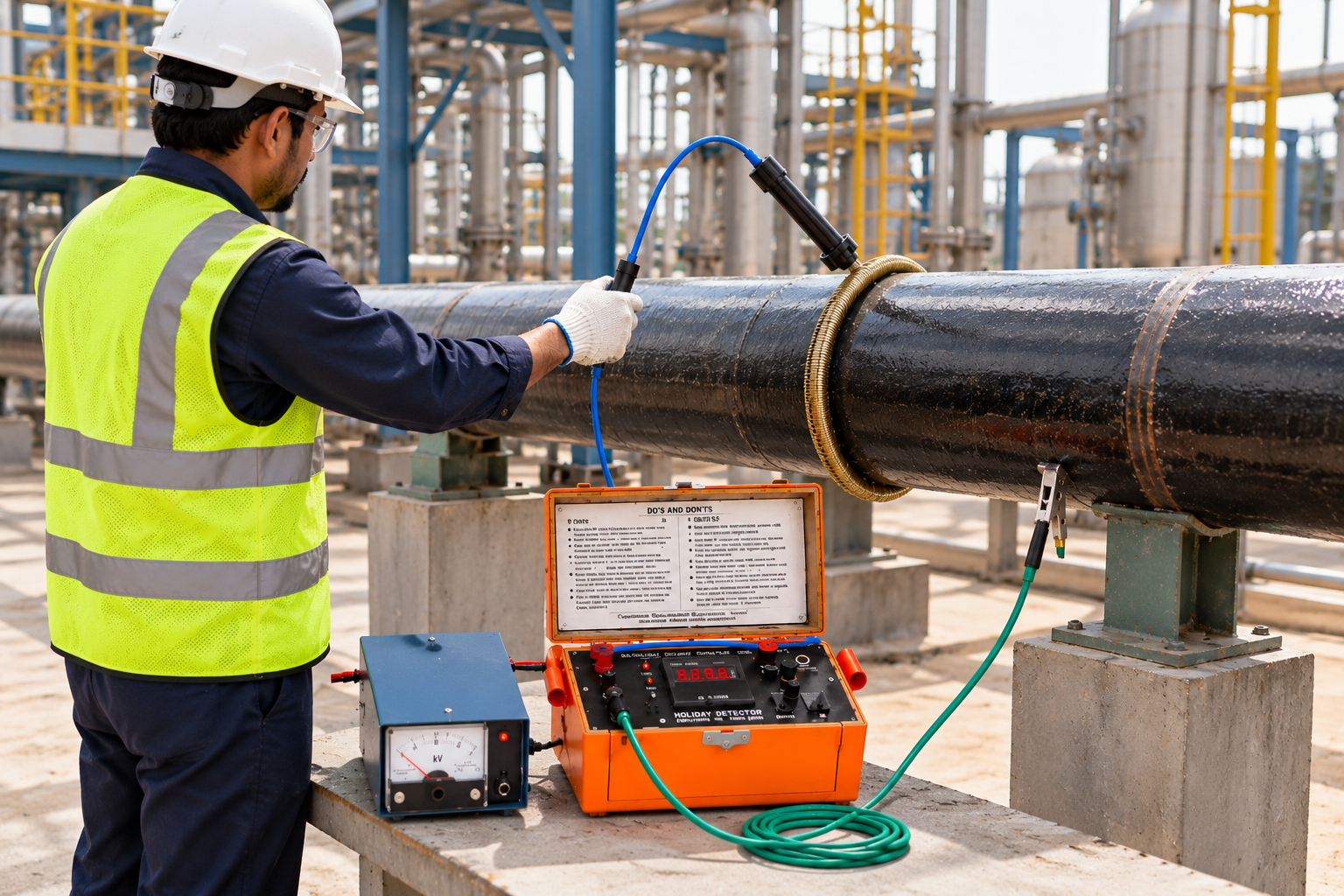
A holiday detector is a specialized coating inspection instrument used to identify defects in non-conductive coatings applied over conductive surfaces. It uses electrical testing methods to detect coating discontinuities that may expose the underlying metal.
Holiday detectors are commonly used in oil and gas pipelines, industrial plants, water pipelines, and protective coating applications.
Key Factors to Consider When Choosing a Holiday Detector
1. Coating Thickness
Coating thickness is one of the most important factors when selecting a holiday detector.
- Thin Coatings: Low-voltage wet sponge detectors are generally suitable for thin, non-conductive coatings.
- Thick Coatings: High-voltage holiday detectors are commonly used for thicker protective coatings.
- Testing Requirements: Always follow the coating manufacturer’s recommendations and applicable inspection standards.
2. Type of Holiday Detector
Two major types of holiday detectors are used for pipeline coating inspection.
Low Voltage Holiday Detector
- Uses a wet sponge testing method.
- Suitable for certain thin protective coatings.
- Helps identify pinholes and coating defects.
High Voltage Holiday Detector
- Uses an electrical probe with an appropriate test voltage.
- Suitable for thicker, non-conductive coatings.
- Commonly used for pipeline and industrial coating inspection.
3. Pipeline Surface and Coating Material
Different pipeline coatings require different inspection methods. Consider the coating material, surface condition, and pipeline diameter before selecting an instrument.
Proper equipment selection helps ensure reliable testing without unnecessary coating damage.
4. Voltage Selection
Selecting the correct testing voltage is essential for accurate results. Excessive voltage can damage coatings, while insufficient voltage may fail to detect defects.
Always select voltage settings according to coating thickness, material specifications, and applicable inspection standards.
5. Equipment Features and Portability
Choose a holiday detector that offers reliable performance and convenient operation.
- Adjustable voltage settings
- Clear audible and visual alarms
- Lightweight, portable design
- Suitable inspection probes
- Reliable battery performance
- Easy calibration and operation
These features improve inspection efficiency and help technicians perform consistent coating tests.
Importance of Holiday Detection in Pipeline Inspection
Regular holiday detection helps identify coating defects before pipelines enter service. Effective inspection reduces corrosion risks, supports coating quality control, and helps prevent expensive maintenance.
For dependable results, inspectors should follow recognized procedures, such as NACE SP0188-2024, and use appropriate equipment.
Conclusion
Choosing the right Holiday Detector for Pipeline Coating Inspection depends on coating thickness, testing voltage, coating material, and inspection requirements. Selecting suitable equipment helps identify defects accurately, protect pipeline surfaces, and improve long-term coating performance.
For reliable inspection solutions, explore professional holiday detectors designed for industrial coating testing and pipeline maintenance.