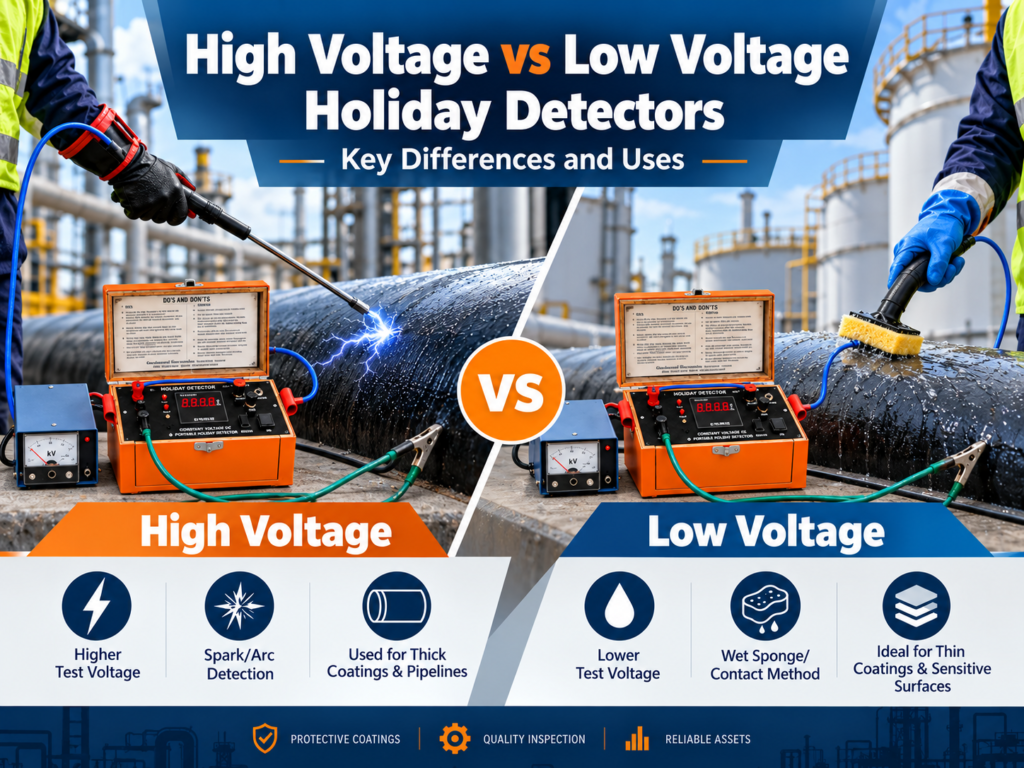
High Voltage vs Low Voltage Holiday Detectors: Key Differences and Uses
Protective coatings play an important role in preventing corrosion and extending the lifespan of industrial equipment. However, small defects, pinholes, and cracks can reduce coating effectiveness. Holiday Detectors help identify these defects before they cause serious damage.
Two commonly used inspection instruments are High Voltage Holiday Detectors and Low Voltage Holiday Detectors. Understanding their differences helps industries choose suitable equipment for accurate coating inspection.
What Is a Holiday Detector?
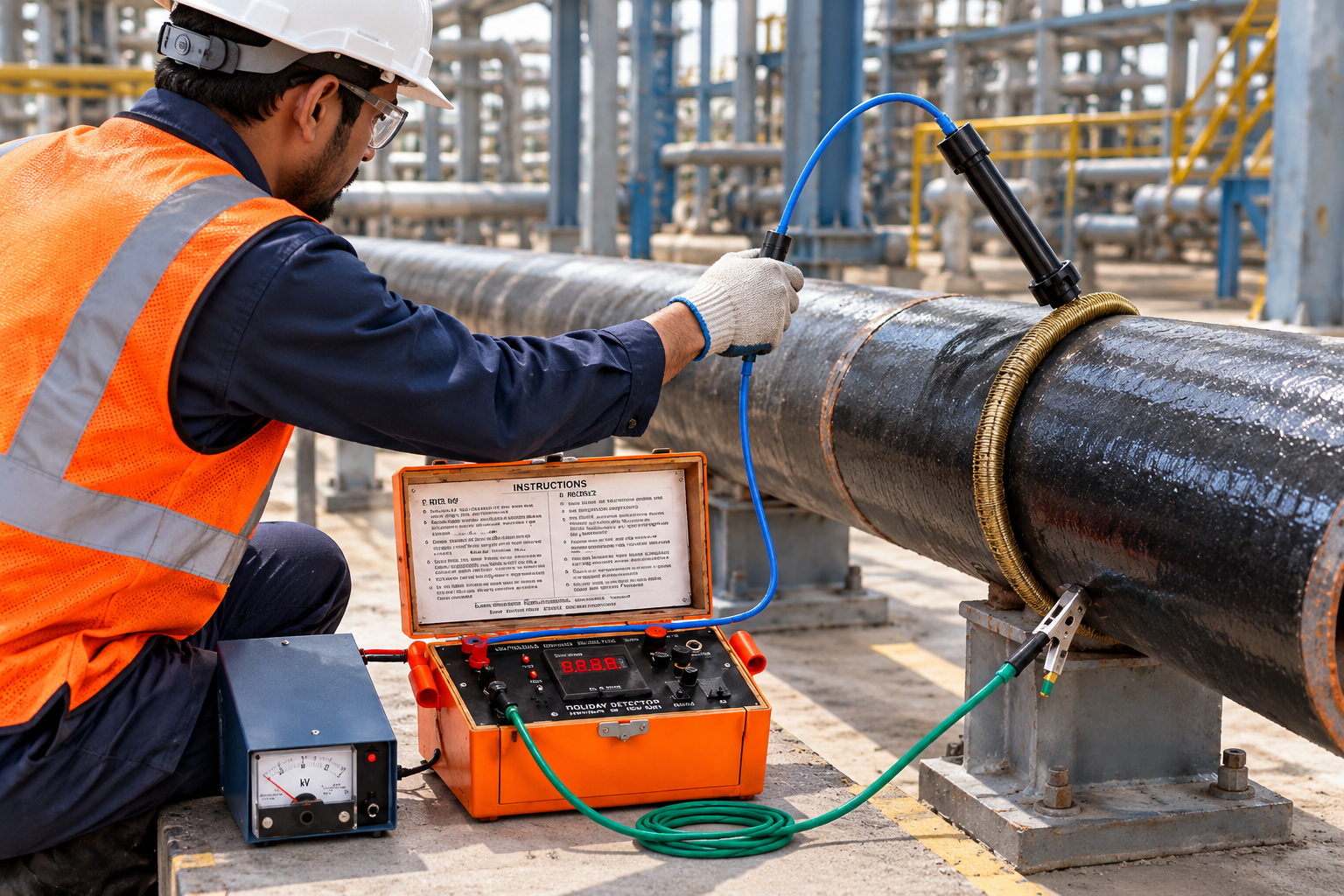
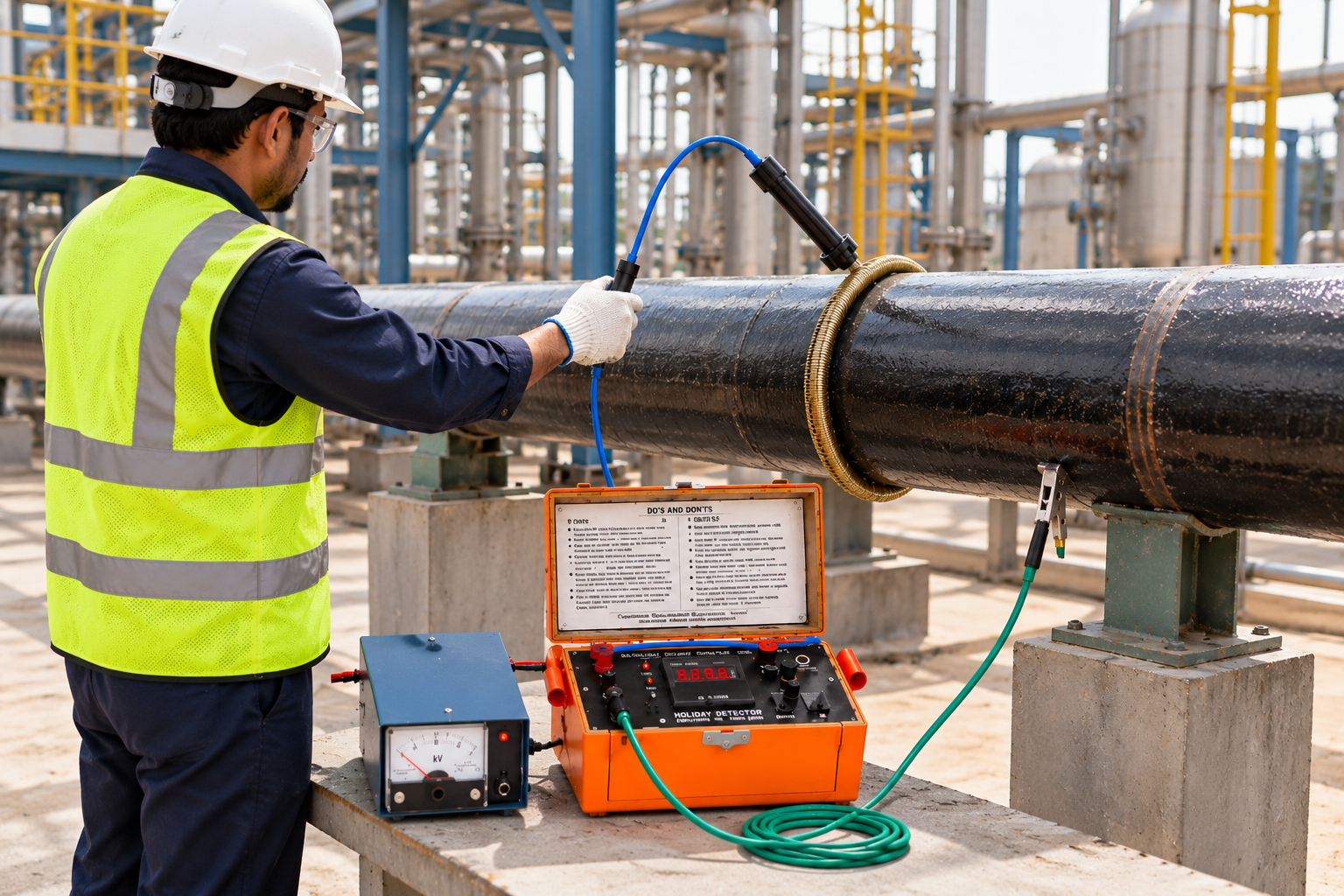
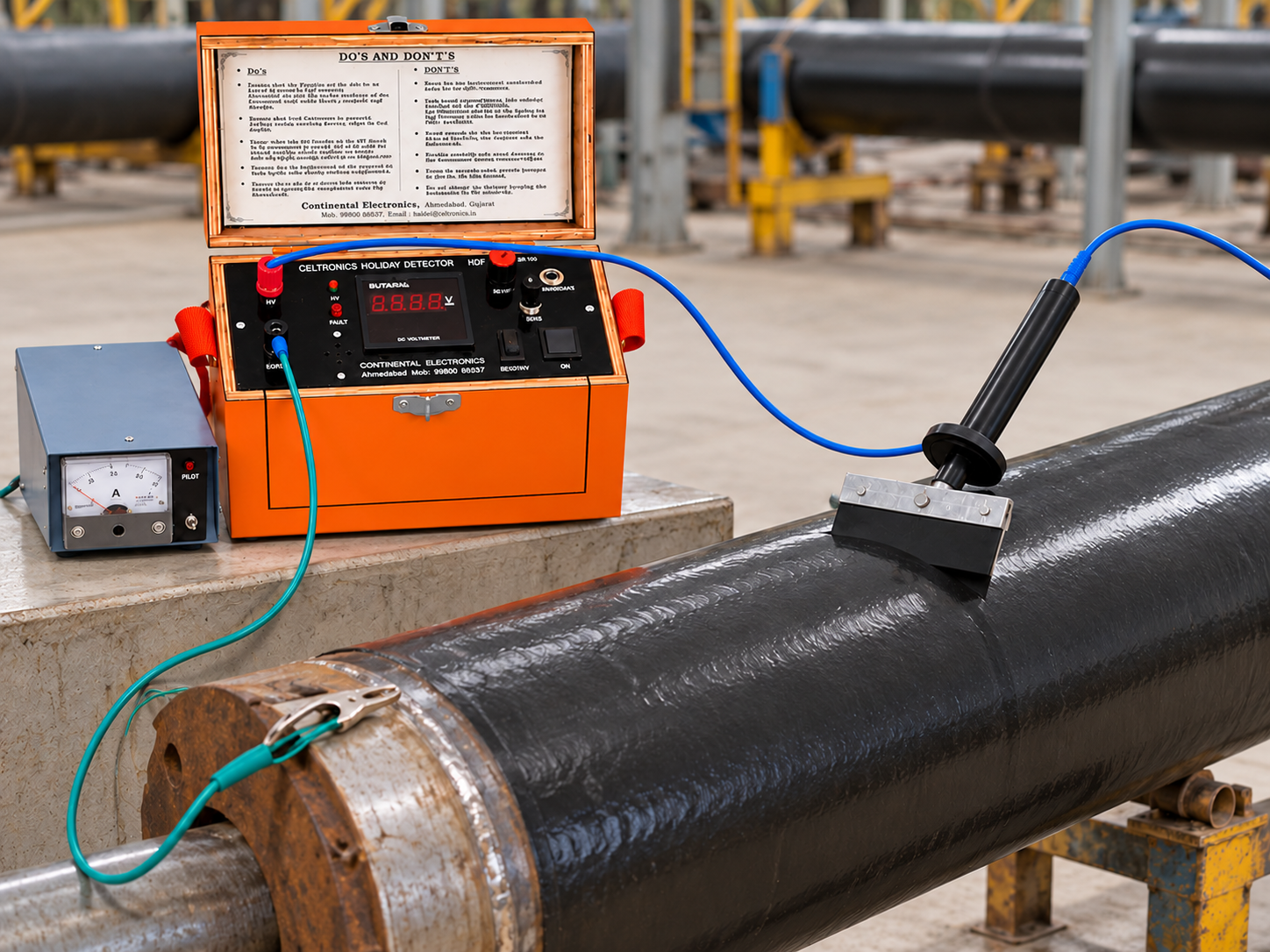
A holiday detector is a specialized testing instrument that identifies discontinuities in non-conductive protective coatings applied over conductive surfaces.
These instruments are widely used in pipeline inspection, oil and gas industries, storage tanks, and industrial coating applications.
What Is a High Voltage Holiday Detector?
A High Voltage Holiday Detector uses an electrical potential to identify coating defects. It is commonly used for inspecting thicker protective coatings on conductive substrates.
Key Features
- Suitable for thick protective coatings.
- Uses high-voltage electrical testing.
- Detects pinholes, cracks, and coating discontinuities.
- Commonly used for industrial pipelines and storage tanks.
- Offers adjustable voltage settings on many models.
Applications
High voltage holiday detectors are frequently used for underground pipelines, industrial tanks, marine structures, and heavy-duty protective coatings.
What Is a Low Voltage Holiday Detector?
A Low Voltage Holiday Detector typically uses a wet sponge testing method to detect defects in thin, non-conductive coatings.
The instrument identifies electrical contact through coating discontinuities when the sponge passes over the coated surface.
Key Features
- Suitable for certain thin protective coatings.
- Suitable for certain thin protective coatings.
- Helps detect pinholes and surface defects.
- Provides convenient operation for coating inspectors.
- Commonly used for thin-film coating inspection.
Applications
Low voltage holiday detectors are commonly used for thin coatings on metal structures, tanks, equipment, and other suitable industrial surfaces.
How to Choose the Right Holiday Detector?
Selecting the appropriate holiday detector depends on several important factors.
- Coating Thickness: Determine whether the coating requires high-voltage or low-voltage testing.
- Coating Material: Check compatibility with the testing method.
- Surface Conditions: Consider moisture, surface preparation, and accessibility.
- Inspection Standards: Follow applicable standards and manufacturer recommendations.
- Equipment Features: Choose reliable instruments with suitable probes and testing capabilities.
Conclusion
Both High Voltage and Low Voltage Holiday Detectors are essential tools for coating quality inspection. High-voltage instruments are generally preferred for thicker coatings, while low-voltage detectors are suitable for certain thin coatings.
Choosing the correct testing method improves defect detection, supports corrosion prevention, and helps maintain coating performance.
For reliable industrial inspection, always use properly maintained equipment and follow applicable coating inspection standards.