What Is a Holiday Detector? Uses, Working Principle, and Benefits
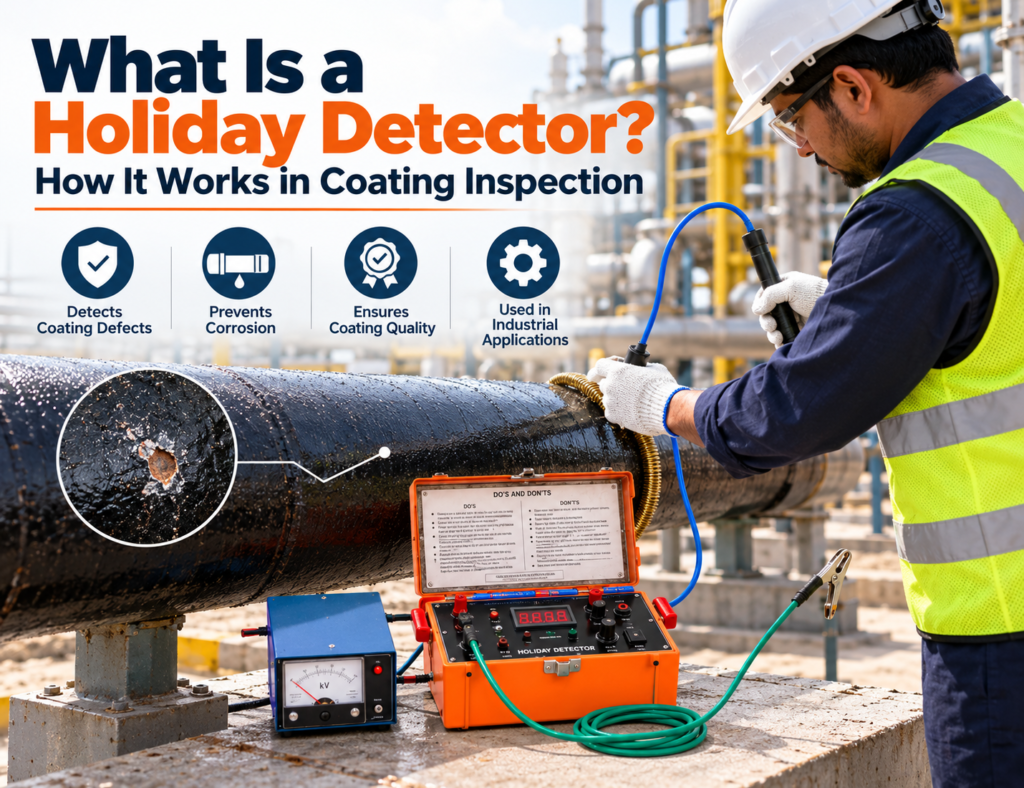
A Holiday Detector is a specialized testing instrument used to identify defects, pinholes, cracks, and discontinuities in protective coatings applied to metal surfaces. It plays an important role in preventing corrosion and ensuring the durability of industrial pipelines, storage tanks, and coated structures.
Holiday Detector testing is widely used in industries where coating quality and long-term protection are essential.
How Does a Holiday Detector Work?
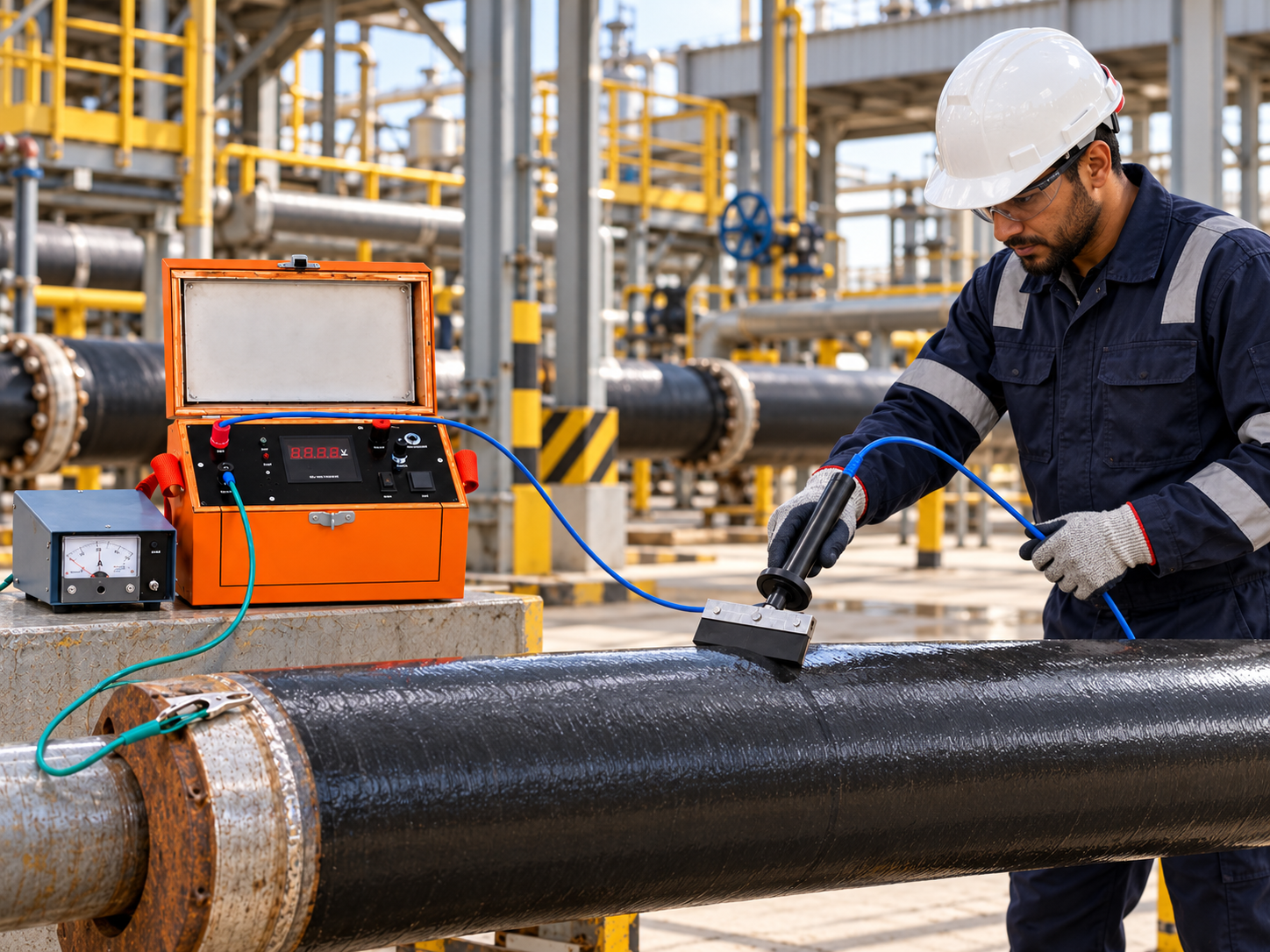
A Holiday Detector uses electrical voltage to identify imperfections in non-conductive coatings applied over conductive metal surfaces.
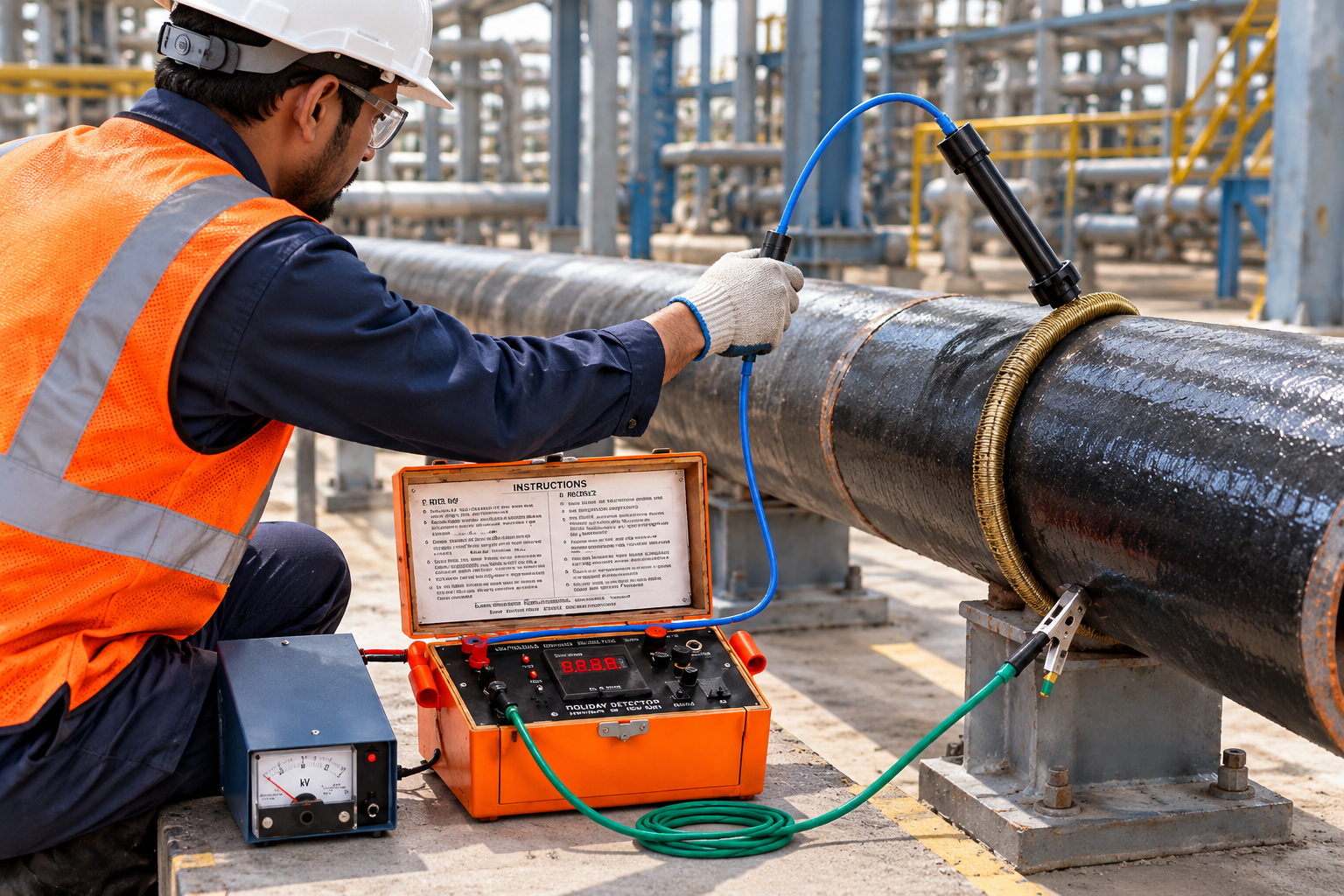
During testing, an electrode moves across the coated surface. If the coating contains a defect exposing the underlying metal, the detector identifies the electrical leakage or discharge and alerts the operator.
Basic Working Process
- Surface Preparation: Ensure the coated surface is clean, dry, and properly cured.
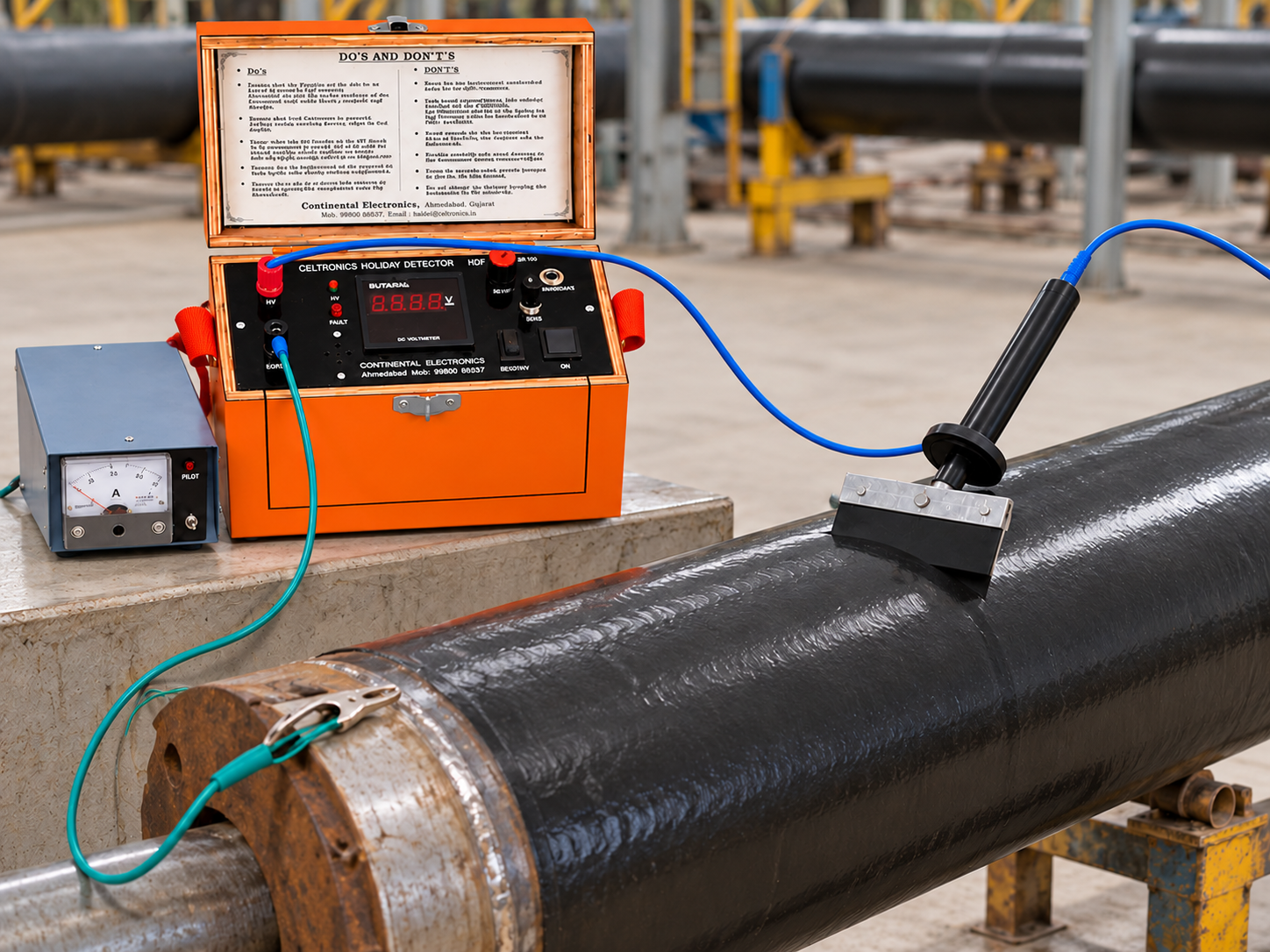
- Equipment Setup: Connect the testing electrode and grounding cable according to the manufacturer’s instructions.
- Voltage Selection: Set the appropriate testing voltage based on coating thickness and applicable standards.
- Coating Inspection: Move the testing electrode across the coated surface.
- Defect Detection: The instrument alerts the operator when a coating discontinuity is detected.
Types of Holiday Detectors
There are two main types of Holiday Detectors used for industrial coating inspection.
1. Low-Voltage Holiday Detector
Low-voltage detectors are generally suitable for thin, non-conductive coatings. They typically use a wetted sponge electrode to identify coating defects without applying high voltage.
2. High-Voltage Holiday Detector
High-voltage detectors are commonly used for thicker protective coatings. They use specialized electrodes, including brush and spring electrodes, to inspect pipelines and large industrial surfaces.
Applications of Holiday Detectors
Holiday Detectors are widely used across different industries, including:
- Oil and Gas Industry: Inspecting protective coatings on pipelines.
- Chemical Industry: Testing coated tanks and processing equipment.
- Water Treatment Plants: Checking coated pipelines and storage structures.
- Marine Industry: Inspecting protective coatings on metal structures.
- Industrial Manufacturing: Ensuring coating quality on fabricated equipment.
Key Benefits of Holiday Detector Testing
- Early Defect Detection: Identifies coating imperfections before corrosion develops.
- Corrosion Prevention: Helps protect underlying metal surfaces.
- Improved Coating Quality: Supports reliable industrial coating inspection.
- Reduced Maintenance Costs: Helps minimize unexpected repair requirements.
- Longer Equipment Life: Supports long-term durability of coated assets.
Conclusion
A Holiday Detector is an essential instrument for maintaining protective coating quality in industrial applications. By identifying pinholes, cracks, and coating discontinuities, it helps industries reduce corrosion risks and improve equipment reliability.
Choosing the right Holiday Detector and following recognized testing standards ensures accurate inspection and effective coating protection.